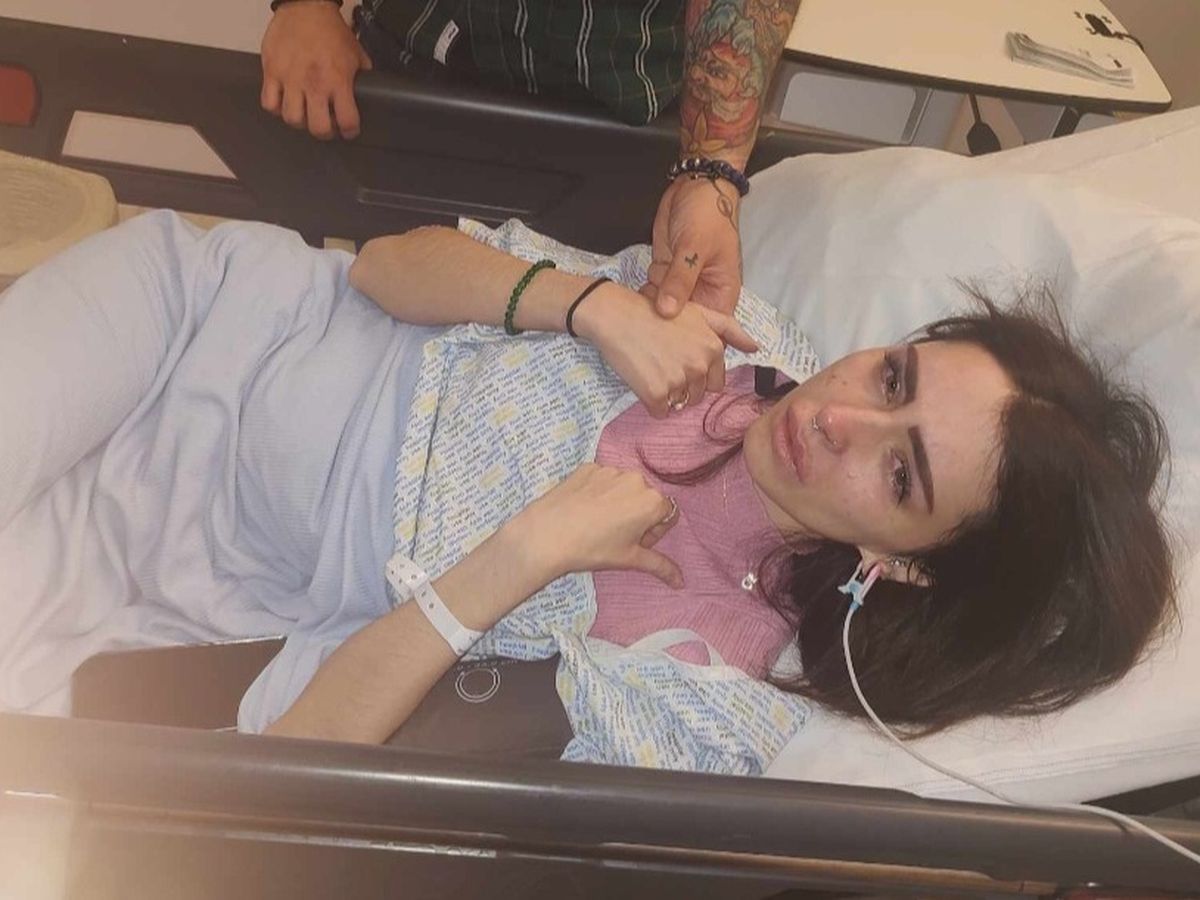

This is Shannon. She is my sister and my best friend in the entire world. Over the last few years I have watched her lose her joy and her health to a life threatening disease known as gastroparesis. Once a glowing young woman with big dreams and a big personality, she is now a shadow of her former self.
My sister's life changed completely in 2022 when she developed unexplained bloating and discomfort, stomach pains and severe and constant nausea. Her symptoms progressed rapidly while we waited for doctors referrals and had many hospital visits, until eventually she had to quit her studies due to the severity of her symptoms. She struggled to eat even a few bites of meals or have water without feeling horrendously full, cripplingly nauseous and in significant pain. Little did we know, it was because food was moving far too slowly through her stomach.
Shannon's weight dropped over the course of 6 months from a healthy 64kg to 42kg despite her best efforts to consume whatever she could.

As her weight plummeted, many healthcare professionals wrongly dismissed her symptoms as "just anxiety" or an eating disorder. This misdiagnosis led to traumatic experiences on the NHS, including a mental health hold where she was forced to eat meals she couldn't digest and watched like a hawk whilst crying for help when they wouldnt even run tests to assess the issues with her stomach to help her. We fought tirelessly for a year for proper investigations and treatment, eventually seeking help from a private doctor in London via phone consultation, who confirmed the gastroparesis diagnosis we had suspected based on her history and progression timeline.
Gastroparesis is a lifelong condition that prevents the stomach from emptying properly, operating instead at a much slower rate or sometimes not at all, where the electrical signals from the brain to the stomach that move food through the digestive tract are impaired. This makes it extremely uncomfortable and difficult for people to gain weight or digest food or water normally. The causes are varied but the most common causes are diabetes, ozempic and vagus nerve damage from surgery. You can read more about gastroparesis here . Unfortunately in some people there is no known cause as is the case with Shannon the doctors have no idea why this happened to her. Although we suspect it is caused by genetic hypermobility (Ehlers Danlos syndrome) and are waiting for a diagnosis on this. Shannon's case of gastroparesis has progressed rapidly and is now severe, with her nausea and abominal pain constant, her weight gain stalled, and her digestive transit time significantly reduced. We've tried numerous treatments over the past year and a half since the diagnosis, including:
- Probiotics
- Various nausea and gut motility medications prescribed by GPs
- Botox injections to the stomach
- Switching from an NJ tube (for 7 months) to a PEG-J tube to bypass her stomach completely (its been 4 months and counting)
- Chinese medicine and accupuncture
- a Vagus Nerve Stimulator
Despite these efforts, Shannon is not responding to medications as we had hoped. For a year now, she's been receiving nutrition nightly through a tube, but her symptoms and condition continues to worsen. She's now at a dangerously low weight of 36kg and unable to increase her caloric intake due to the limitations of tube feeding and orally. She hasn't been able to digest foods since Dec 2023 and is only able to tolerate liquids orally in limited quantities such as sips of bone broth or ice poles. These provide her with electrolytes and vitamins but are very low in calories as she can't seem to digest or tolerate fats.
We are now waiting for a wider tube replacement to her jejunum (the current one is partially broken) and to see if erythromycin can alleviate some of her symptoms to allow her to consume enough nutrition with the tube to help her gain weight.
However, being at such a low weight for so long also comes with issues - malnutrition, dehydration and blood sugar issues as well as hair loss, feinting and chronically low potassium. Her heart is now starting to struggle - at the time of posting this, she was in hospital for severe chest pains and an EKG revealed that she has long QT syndrome , further complicating things. This is why we want to get her this treatment as soon as possible.
Sadly her gastroenterologists have said they cant do anything more for her beyond check-ins, tube maintenance and ensuring her mineral levels are stable, as she is not diabetic and they do not agree that she has gastroparesis anyway, despite her transit time worsening over the last few years and tbe intensity of her other symptoms including malabsorption. We have heard that there are other people on the NHS with gastric motility disorders who seem to be receiving treatments like TPN, which can help patients gain weight and receive nutrition intravenously. This is something which Shannon has requested and was denied, despite her struggle to gain weight through tube feeding.
Therefore the next best hope we have is the gastric pacemaker , a treatment we were told is not yet available on the NHS for non-diabetic patients. This groundbreaking device works by sending electrical signals or pulses to the stomach via electrodes under the skin, prompting the stomach to move and empty as if functioning normally again. Studies show it can significantly reduce nausea and vomiting, reduce abdominal pains and bloating, improve quality of life, and can even help people to eat some foods again. Even then upon fitting, it takes a few months of trial and error to find the right settings for the pacemaker and the individual so adjustments may be needed as time goes by.
This treatment could be a lifeline for Shannon after years of enduring traumatic medical gaslighting, two botched tube fitting procedures that have left her with a partially working tube, traumatic memories, stoma infections and constant pain from the rubbing of an internal bumper. With the gastric pacemaker, she stands a chance at a semi-normal life, potentially allowing her to digest food again, gain weight, eat, socialize, and pursue her passions once again.
The procedure costs around £40,000, not including aftercare, and battery replacements which will need to be done every few years. We were quoted that amount (plus more in fees) for Shannon to get this procedure done privately by the most esteemed gut doctor in the UK who is based in London. He has given us hope with a treatment plan outlined for Shannon, if she can gain enough weight to have the procedure which we know will not be without difficulty. We are also pursuing options closer to home such as with Nuffield hospital in Leeds. However, we simply cannot afford the treatment, consultation fees and tests on our own so I am reaching out for your support to give my sister a chance to reclaim her life.
This GoFundMe is our last hope to access this life-changing treatment. Every donation you make, even as little as £1, brings us closer to the procedure which has the power to restore Shannon's health, dignity, and future. Donations will be used to pay for things that will improve shannons quality of life medically, such as:
- the cost of the gastric pacemaker and fitting (approx £42k with Dr Shidrawi at the Wellington hospital in London, or £25k for Simon Dexter at the Nuffield Hospital in Leeds - depending on doctor availability)
- battery replacements when needed (£3-4k estimate every few years)
- the cost of tests and treatment from private doctors e.g. for an updated gastric emptying study and other assessments such as scans of her internal organs (including MRI, HIDA, CT, barium swallow, capsule endoscopy), any necessary tube replacements (if not offered by the NHS), medicines or alternative treatments like TPN
- consultation and appointment fees for private specialists (between £230 and £450 via telephone or in person)
- hotel or private hospital overnight stays for surgeries, procedures and tests, including anaesthesia costs.
If anything happens to Shannon and she cannot receive the pacemaker, or there is anything leftover, it will be donated it to others in need of gastroparesis treatment.
If you're unable to donate, then please share this campaign. Your support means so much to us and could save a life whilst helping to raise awareness about gastroparesis for others suffering from this grossly underfunded condition. Thankyou for your kindness and patience in reading this and thankyou for your contribution.
